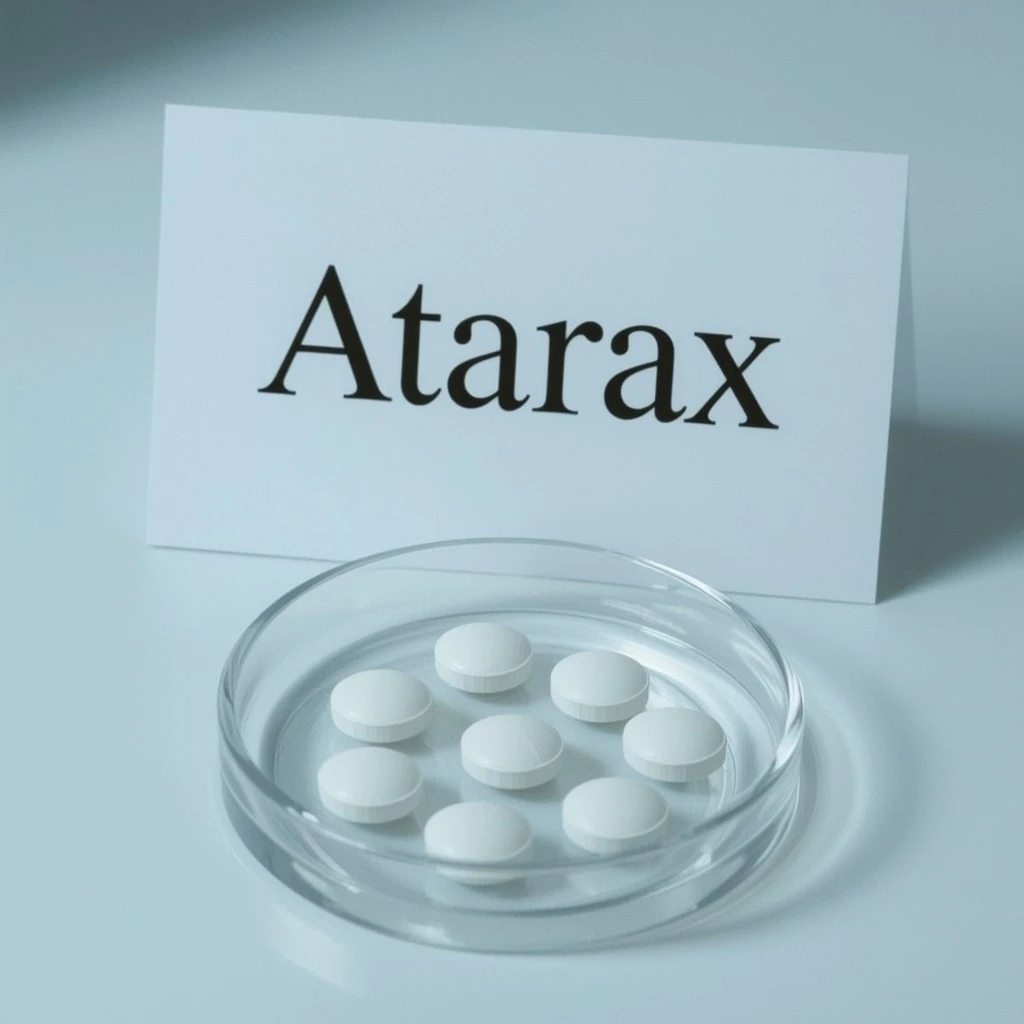
Atarax is the brand name for an older, well‑established antihistamine that has both anti‑allergy and anti‑anxiety properties. Unlike many standard allergy tablets that only target histamine receptors in the body, Atarax also affects certain brain pathways, which gives it a calming, sedative effect. Because of this dual action, it is prescribed for a wider range of conditions than many newer antihistamines. It does not cure underlying anxiety or allergies, but it helps control symptoms so that people can function more comfortably in daily life, especially during flare‑ups.
One of the most common uses of Atarax is short‑term relief of anxiety and tension. It is often chosen when a patient needs something milder than benzodiazepines or when those stronger medicines are not a good option. Atarax can reduce restlessness, muscle tension, and the physical “on edge” feeling that comes with stress. Some clinicians also use it as an add‑on to other anxiety treatments, especially while waiting for longer‑acting medications such as SSRIs to take full effect. The sedating properties can also improve sleep in people whose insomnia is driven by worry or agitation.
Building a reliable home pharmacy often means becoming familiar with a variety of prescription medications available through a trusted source. Alongside Atarax, many customers continue exploring other well-known products that may be useful for different healthcare situations. Zofran remains one of the most frequently viewed medications in our catalog and continues to attract interest from returning customers. If you would like to review another trusted prescription option, you can buy zofran online and learn more about this medication.
Atarax is also widely used as an anti‑itch medication. It is particularly helpful in conditions like chronic urticaria (hives), eczema flare‑ups, contact dermatitis, and itching caused by allergic reactions or certain systemic illnesses. By blocking histamine, Atarax reduces the sensation of itching and the urge to scratch, which can prevent skin from breaking down and becoming infected. For some people, itching is worst at night and interferes with sleep; Atarax’s drowsy effect at bedtime can be an advantage in these cases, helping them rest and heal.
In addition to anxiety and allergies, Atarax may be used in pre‑operative or post‑operative settings to calm patients and reduce nausea or vomiting, often as part of a broader regimen. Some doctors turn to Atarax when they want a medicine with both anti‑nausea and calming benefits, especially in people who are sensitive to opioids or other sedatives. While it is usually not the first‑line option for chronic anxiety disorders or persistent insomnia, its versatility makes it a useful tool for targeted, short‑term symptom relief across several clinical situations.
Atarax dosing is individualized and should always follow a healthcare provider’s instructions. For adults using Atarax for anxiety, typical total daily doses range from 50 to 100 mg, divided into two to four smaller doses throughout the day. A common starting point is 25 mg taken up to three or four times a day, adjusted according to response and side effects such as drowsiness. Some people obtain adequate relief with much lower doses, especially older adults or those who are more sensitive to sedating medications.
When Atarax is used to treat itching or allergic reactions, doses are often similar but may be taken less frequently, sometimes only in the evening if nighttime itching is the main concern. For example, a prescriber might suggest 25 mg at night and an additional 10–25 mg earlier in the day during bad flares. Pediatric dosing is based on body weight and must be calculated by a clinician; parents should never guess the dose for children. Because Atarax can cause sedation, any dose changes should be gradual, watching carefully for excessive sleepiness or impaired alertness.
Atarax tablets or capsules are usually taken by mouth with a glass of water, and they can be taken with or without food. Taking the medication with a light snack may reduce any mild stomach upset. For anxiety or daytime itching, doses are commonly spaced evenly during waking hours. For sleep‑related use, the largest dose is often taken 30–60 minutes before bedtime, allowing time for the sedative effect to develop. Patients should avoid crushing or chewing tablets unless a pharmacist confirms it is safe for the specific formulation they have.
Because Atarax can impair concentration and reaction time, it is important not to drive, operate heavy machinery, or engage in risky activities until you know how the medication affects you. Alcohol and other sedating drugs can significantly intensify drowsiness. If you obtain Atarax through a telehealth provider like Physician House Calls of Kansas, the clinician will review your health history and current medications before suggesting a dose. Never exceed the prescribed amount in an attempt to deepen the calming effect or improve sleep, as this increases the risk of side effects without providing better long‑term results.
Before starting Atarax, it is essential to share your full medical history with a healthcare professional. Atarax can affect heart rhythm, especially at higher doses or in people who already have heart disease, a history of arrhythmias, or a family history of sudden cardiac death. Patients with known prolonged QT interval on ECG or those taking certain heart medications need careful evaluation. This is one reason why even when you want to buy Atarax without prescription in the traditional sense, a structured telehealth screening is still medically important.
Liver and kidney function must also be considered. Atarax is processed and cleared through these organs, so people with moderate to severe hepatic or renal impairment may require lower doses or may need to avoid the medication entirely. Older adults are generally more sensitive to the sedative and anticholinergic effects of Atarax, such as confusion, constipation, and difficulty urinating, which can increase fall risk and interfere with quality of life. For this reason, geriatric patients should use the lowest effective dose under close supervision.
Atarax can have anticholinergic side effects—dry mouth, blurred vision, urinary retention, and constipation. People with glaucoma, particularly narrow‑angle glaucoma, enlarged prostate (benign prostatic hyperplasia), urinary retention issues, or severe chronic constipation should use Atarax with caution or avoid it altogether. Those with respiratory conditions like severe asthma, chronic obstructive pulmonary disease (COPD), or sleep apnea can be more vulnerable to breathing suppression when combined with other sedatives.
Pregnancy and breastfeeding deserve special attention. Atarax should generally be avoided in early pregnancy unless a clinician believes the benefits outweigh potential risks, as older data suggest theoretical concerns about fetal effects. During breastfeeding, small amounts may pass into breast milk and cause drowsiness in the infant. Women who are pregnant, trying to conceive, or nursing should discuss safer alternatives or very limited, supervised use. All patients, regardless of how they access the medication, should follow the guidance of a licensed professional and report new or unexpected symptoms promptly.
Atarax is not suitable for everyone. It is contraindicated in individuals with a known allergy or hypersensitivity to the drug itself or to similar antihistamines. Symptoms of allergy can include rash, itching, swelling of the face or throat, severe dizziness, or breathing difficulty. If any of these occur after taking Atarax, the medication must be stopped immediately and emergency care sought. Patients who have experienced a severe reaction to the injectable or liquid forms of related medications should also avoid Atarax tablets or capsules.
Another key contraindication involves certain heart rhythm conditions. People with known prolonged QT interval, congenital long QT syndrome, or a history of torsades de pointes (a specific dangerous arrhythmia) should not take Atarax. Combining Atarax with other medications that also prolong the QT interval or disturb electrolytes can further increase this risk. This includes some antidepressants, antipsychotics, and certain antibiotics. Because this risk may not be obvious to patients, assessment by a clinician—such as through the Physician House Calls of Kansas telehealth platform—is strongly recommended before starting therapy.
Atarax is also generally contraindicated in early pregnancy, particularly the first trimester, unless no safer alternatives are appropriate and the potential benefits justify the risks. Some regulatory agencies advise against its use during labor and delivery because of possible effects on the newborn’s nervous system. Severe liver disease or severe kidney failure can make Atarax unsafe, as the drug may accumulate in the body and cause toxicity. In these cases, doctors typically select alternative treatments with a better safety profile.
Children, especially very young children, may be at increased risk of paradoxical reactions such as agitation or hyperactivity instead of sedation, and dosing errors are more dangerous in this group. For that reason, Atarax should not be used in infants and must be used with extreme caution and precise dosing in older children, strictly under pediatric supervision. People who regularly drink large amounts of alcohol or take multiple sedating drugs are poor candidates for Atarax unless their entire regimen can be reviewed and managed closely by a physician.
Like all medications, Atarax can cause side effects, although not everyone experiences them. The most common side effect is drowsiness or sedation, which is often considered part of its therapeutic effect for anxiety and sleep problems. However, this sedation can extend into the daytime, causing fatigue, slowed reaction time, and difficulty concentrating. Some people may describe feeling “hungover” or foggy the morning after taking a nighttime dose. Adjusting the timing or lowering the dose can sometimes improve this without losing symptom control.
Other frequent side effects include dry mouth, mild headache, dizziness, and gastrointestinal symptoms such as nausea or constipation. The dry mouth can be managed by sipping water regularly, chewing sugar‑free gum, or using saliva substitutes if needed. Constipation may improve with increased fiber intake, fluids, and activity, but severe or persistent constipation requires medical review. Blurred vision and difficulty focusing can occur, especially shortly after taking a dose, reinforcing the need to avoid driving or using machinery until you understand your personal response to Atarax.
Less common but more serious side effects include confusion, agitation, tremors, difficulty urinating, and rapid or irregular heartbeat. Older adults are particularly susceptible to confusion, disorientation, or falls when taking sedating antihistamines. Rarely, Atarax can cause serious heart rhythm disturbances, especially in people with other risk factors, leading to palpitations, fainting, or, in extreme situations, sudden cardiac events. Any sensation of chest pain, severe dizziness, or fainting while on Atarax demands urgent medical attention.
Allergic reactions to Atarax are uncommon but possible. Warning signs include hives, swelling of the lips, tongue, or face, tightness in the throat, and difficulty breathing. This scenario is a medical emergency. When obtaining Atarax via a service like Physician House Calls of Kansas, you will typically be educated about these potential risks and advised how to respond. Most patients tolerate Atarax well when used short term and at appropriate doses, but ongoing monitoring and open communication with a clinician help ensure continued safety.
Atarax can interact with a variety of medications, supplements, and substances, mainly by increasing sedation or affecting heart rhythm. Combining Atarax with other central nervous system depressants—such as benzodiazepines, opioid pain medications, certain sleep aids, muscle relaxants, or alcohol—can lead to additive drowsiness, slowed breathing, and impaired coordination. This raises the risk of accidents, falls, and in severe cases, respiratory depression. Patients should be especially cautious about using over‑the‑counter sleep products or cough syrups that may contain additional sedating antihistamines.
Another significant category of interactions involves medications that can prolong the QT interval on an ECG. Some antidepressants (like certain SSRIs and tricyclics), antipsychotics, antiarrhythmic heart drugs, and specific antibiotics or antifungals can all influence heart rhythm. When these are taken with Atarax, the combined effect may increase the risk of dangerous arrhythmias. Electrolyte‑disturbing medications, such as some diuretics, can further compound this problem by lowering potassium or magnesium levels, which are important for stable cardiac function.
Atarax also has anticholinergic properties, so combining it with other anticholinergic medications—such as some bladder control drugs, certain antidepressants, or older antipsychotics—can intensify side effects like blurred vision, constipation, confusion, or difficulty urinating. Older adults are especially prone to this cumulative anticholinergic burden, which has been associated with cognitive decline and falls. Herbal products with sedating effects, including kava, valerian, or high‑dose melatonin, may further increase drowsiness and should be used only after medical review.
Because many interactions are not obvious to non‑professionals, it is vital to give a complete list of all prescription drugs, over‑the‑counter products, vitamins, and herbal supplements to your healthcare provider before starting Atarax. When using a telemedicine service like Physician House Calls of Kansas, you will typically complete a structured medication history that allows the clinician to screen for interactions. Never start, stop, or adjust the dose of Atarax or other medications on your own without discussing it with a qualified medical professional.
If you miss a dose of Atarax, the safest approach depends on how close you are to your next scheduled dose. In general, if you remember relatively soon after the missed dose, you can take it as soon as you recall. However, if it is almost time for your next dose, skip the missed one and return to your regular dosing schedule. You should never double up on doses to “catch up,” as this may increase the risk of excessive drowsiness, confusion, or other side effects without offering any extra benefit.
For people using Atarax only at bedtime for sleep or nighttime itching, missing a dose may simply mean a more restless night. In that situation, do not take the medication in the middle of the night if you will need to be awake or active early in the morning, as lingering sedation can persist. If you frequently forget doses and rely on Atarax for anxiety or allergy control, consider setting reminders or discussing whether a simpler regimen might work better for you. Your clinician can help tailor the schedule during follow‑up visits.
An overdose of Atarax can be dangerous and requires immediate medical attention. Symptoms of overdose may include extreme drowsiness or profound sedation, confusion, agitation, hallucinations, very fast or irregular heartbeat, tremors, seizures, difficulty breathing, or loss of consciousness. In children, overdose may present as unusual excitement, restlessness, or seizures rather than simple sleepiness. Because Atarax also has anticholinergic effects, severe overdose can cause hot, dry skin, dilated pupils, flushed face, and inability to urinate.
If you suspect that you or someone else has taken too much Atarax—whether accidentally or intentionally—seek emergency care immediately. Do not wait for symptoms to worsen. In an emergency setting, clinicians may provide supportive care such as cardiac monitoring, oxygen, intravenous fluids, and medications to manage seizures or severe agitation. Inducing vomiting at home is not recommended and can be harmful. To prevent overdose, always keep Atarax in its original container, out of sight and reach of children, and never share your prescription with others, even if they have similar symptoms.
Proper storage of Atarax helps preserve its effectiveness and reduces the risk of accidental ingestion. Keep Atarax tablets or capsules at room temperature, generally between 68°F and 77°F (20°C to 25°C), away from excessive heat, direct sunlight, and moisture. Avoid storing the medication in bathrooms or other humid environments where steam from showers can degrade the tablets over time. Always keep the bottle tightly closed when not in use, and check the label for any product‑specific instructions from the manufacturer or pharmacist.
Store Atarax in a secure place out of reach and sight of children and pets. Many accidental poisonings occur when medications are left on bedside tables, in purses, or on kitchen counters. If your routine requires keeping a dose near your bed for nighttime use, ensure it is in a child‑resistant container and inaccessible to curious hands. Do not use Atarax past its expiration date, as potency and safety can no longer be guaranteed. When you no longer need the medication, ask a pharmacist or your telehealth provider about proper disposal programs instead of throwing it in household trash or flushing it down the toilet.
In the United States, Atarax is classified as a prescription‑only medication. This means that, under federal and state regulations, it cannot be legally sold over the counter or dispensed by a pharmacy without a valid order from a licensed clinician. The goal of this restriction is to ensure that patients are properly evaluated for medical conditions, potential drug interactions, and safety risks—particularly heart rhythm issues and sedative effects—before starting therapy. Traditional access typically requires an in‑person office visit followed by a paper or electronic prescription sent to a pharmacy.
Many patients, however, find it difficult to schedule or attend in‑person appointments because of time constraints, limited mobility, transportation barriers, or living in areas with few local providers. This is where modern telehealth offers a practical alternative. Instead of bypassing medical oversight by purchasing Atarax from unregulated online sources, patients can choose a lawful, structured route that still allows them to effectively buy Atarax without prescription in the old‑fashioned sense of a paper script, while remaining fully compliant with U.S. law.
Physician House Calls of Kansas provides exactly this sort of legal, supervised solution. Through a secure telemedicine platform, you can connect with a licensed clinician who reviews your medical history, current symptoms, and existing medications. If Atarax is considered appropriate and safe for your situation, the clinician can generate an electronic prescription and direct it to a partner pharmacy or a pharmacy of your choice. From your perspective, you are able to buy Atarax without prescription paperwork or an in‑office visit, yet every step is grounded in professional evaluation and regulatory compliance.
This model combines convenience with safety. Rather than self‑diagnosing and ordering from off‑shore websites of questionable legitimacy, you undergo a brief but meaningful consultation, often from the comfort of your home. The provider can also explain correct dosing, precautions, side effects, and follow‑up plans, tailoring therapy to your needs. If Atarax is not appropriate, they can recommend safer alternatives. In this way, Physician House Calls of Kansas offers a modern, patient‑centered path to access Atarax and similar medications, aligning telehealth flexibility with the safeguards of traditional medical care.
Atarax is the brand name for hydroxyzine, an antihistamine medication. It is commonly used to treat anxiety, tension, itching caused by allergic reactions, hives, and sometimes to help with sleep. Doctors may also use Atarax before or after surgery to help with sedation and to reduce nausea and vomiting.
Atarax blocks the action of histamine, a chemical released during allergic reactions, which helps reduce itching, redness, and swelling. It also has effects on certain brain receptors (including serotonin and other neurotransmitter systems), which can produce calming, sedative, and anti-anxiety effects.
Yes, Atarax is often prescribed for short-term relief of anxiety and tension. It does not work like antidepressants or benzodiazepines but can help reduce anxiety symptoms such as restlessness, nervousness, and physical tension. It is usually not a first-line long-term treatment for anxiety disorders.
Atarax usually begins to work within 15 to 60 minutes after taking a dose by mouth. Sedative and anti-itch effects often appear fairly quickly. Peak effects are typically seen within about 2 hours. For ongoing conditions like chronic itching or anxiety, it may take a few days of regular use to notice full benefits.
The effects of a single dose of Atarax usually last 4 to 6 hours, though sedation can last longer in some people. The half-life (time it takes for half the drug to leave the body) in adults is roughly 20 hours, but this can be longer in older adults or people with liver or kidney problems.
Common side effects include drowsiness, dry mouth, dizziness, headache, blurred vision, and sometimes constipation or urinary retention. Most side effects are mild and improve as your body adjusts. If side effects are severe or persistent, a doctor should be consulted.
Yes, Atarax is sedating for many people. Drowsiness is one of its most common side effects and is part of why it is sometimes used as a short-term sleep aid or before surgery. Because of this, you should avoid driving or operating machinery until you know how it affects you.
Atarax is not considered addictive in the way benzodiazepines or some sleep medications can be. It does not cause physical dependence or withdrawal symptoms in typical use. However, any medication used for anxiety or sleep should be taken only as prescribed and reviewed regularly with a healthcare provider.
It is not recommended to drink alcohol while taking Atarax. Both Atarax and alcohol depress the central nervous system, and using them together can increase drowsiness, dizziness, difficulty concentrating, and the risk of accidents or falls.
Atarax may not be suitable for people with certain conditions, such as narrow-angle glaucoma, severe heart rhythm problems (like prolonged QT interval), urinary retention, or certain breathing disorders. People who are allergic to hydroxyzine, cetirizine, or levocetirizine should not take Atarax. It should be used with caution in older adults and in those with liver or kidney disease.
Atarax is generally not recommended during early pregnancy unless the potential benefit outweighs the risk and a doctor specifically advises it. Some data suggest possible risks, especially in the first trimester. Pregnant women should speak with their obstetrician or healthcare provider before using Atarax.
Hydroxyzine passes into breast milk and may cause sedation, irritability, or feeding problems in a nursing infant. Because of this, Atarax is usually not recommended while breastfeeding, or it must be used with caution and close medical guidance.
If you are taking Atarax on a regular schedule and miss a dose, take it as soon as you remember. If it is almost time for your next dose, skip the missed dose and resume your usual schedule. Do not double doses to make up for a missed one. For occasional or as-needed use, simply take it when needed, following your prescription instructions.
Atarax can be prescribed for children for conditions like itching or anxiety, but dosing must be carefully adjusted based on age and weight. Infants and very young children are more sensitive to sedating effects and possible breathing issues, so it must only be used under a pediatrician’s supervision.
Atarax can, in some cases, affect the heart’s electrical activity and may prolong the QT interval, which can lead to serious arrhythmias in susceptible individuals. This risk is higher if you have existing heart disease, low potassium or magnesium levels, or are taking other QT-prolonging drugs. People at risk should be evaluated by a doctor, and sometimes ECG monitoring is recommended.
Because Atarax commonly causes drowsiness, slowed reaction time, and sometimes blurred vision, you should not drive or operate heavy machinery until you know how it affects you. If you feel sleepy or impaired, avoid these activities completely.
Atarax is not primarily approved as a sleep medicine, but its sedative properties mean some doctors use it off-label to help with insomnia, particularly when anxiety or itching is part of the problem. It is usually recommended for short-term use and not as a long-term treatment for chronic insomnia.
Yes, most people can stop Atarax without tapering, and it does not usually cause withdrawal symptoms. However, your original symptoms (such as itching or anxiety) may return. If you have been taking it regularly and at higher doses, it is still wise to talk with your healthcare provider before stopping.
Atarax can interact with other sedating medications such as benzodiazepines, opioids, certain sleep medications, antipsychotics, some antidepressants, and alcohol, increasing drowsiness and risk of respiratory depression. It can also interact with other drugs that prolong the QT interval. Always tell your doctor and pharmacist about all medicines and supplements you are taking.
Atarax (hydroxyzine) is a first-generation antihistamine that readily crosses the blood–brain barrier, causing more sedation. Cetirizine and loratadine are newer, second-generation antihistamines that are designed to be less sedating. Atarax is used more often when sedation or anti-anxiety effects are desired, while cetirizine and loratadine are preferred for daytime allergy relief.
Both Atarax and Benadryl are first-generation, sedating antihistamines used for allergies and itching. Atarax is often seen as having stronger and longer-lasting anti-itch and anxiolytic (anti-anxiety) effects, and it is commonly prescribed, whereas Benadryl is more often bought over-the-counter. Benadryl tends to have a shorter duration of action and may cause more anticholinergic side effects (like dry mouth and urinary retention) in some people.
Atarax and Vistaril are actually different brand names for the same active ingredient, hydroxyzine, though in some regions they refer to different salt forms (hydroxyzine hydrochloride vs hydroxyzine pamoate). Their overall potency is similar when equivalent doses are used. Any difference you experience is usually due to formulation, dose, or individual response rather than one being inherently “stronger.”
Atarax is a brand name, and hydroxyzine is the generic name of the drug. They contain the same active ingredient and work in the same way. Generic hydroxyzine usually works just as well as Atarax, although inactive ingredients (fillers, dyes) may differ slightly.
Atarax is an antihistamine with sedative and anti-anxiety effects, often used short-term or as-needed. Buspirone is a non-sedating, non-benzodiazepine anxiolytic designed for longer-term management of generalized anxiety disorder. Buspirone must be taken regularly and can take several weeks to work, while Atarax acts quickly but is not usually a long-term solution. Buspirone also lacks the antihistamine side effects like dry mouth and strong drowsiness.
Benzodiazepines are generally more potent and faster-acting for acute, severe anxiety and panic, but they carry a significant risk of dependence, tolerance, and withdrawal. Atarax is less potent for anxiety but is not addictive and has a different side-effect profile, mainly sedation and anticholinergic effects. Many clinicians prefer Atarax for milder anxiety or when they want to avoid benzodiazepine use, especially in people with a history of substance use issues.
SSRIs (such as sertraline, escitalopram) are antidepressants often used as first-line, long-term treatments for chronic anxiety disorders. They do not provide immediate relief but build effect over weeks. Atarax provides short-term, quick relief of anxiety and is often used as an add-on or temporary measure. SSRIs address underlying mood and anxiety conditions, while Atarax mainly treats symptoms on an as-needed basis.
For routine daytime allergy symptoms like sneezing, runny nose, and mild itching, Zyrtec (cetirizine) is usually preferred because it is less sedating. Atarax can be more useful for severe itching or hives, particularly at night, because of its strong sedative and antipruritic effects. The choice depends on symptom severity and whether you can tolerate or need sedation.
Claritin is a non-sedating second-generation antihistamine often chosen for daytime use because it usually does not cause drowsiness. Atarax is more sedating and may be more effective for intense itching, hives, or anxiety-related symptoms, especially when nighttime relief is needed. For people who need to stay alert, Claritin is usually a safer option.
Both Atarax (hydroxyzine hydrochloride) and Vistaril (hydroxyzine pamoate) contain hydroxyzine and have similar effects on anxiety and sleep when dosed appropriately. Some clinicians prefer Vistaril for anxiety and Atarax more for itching, but this is more a matter of tradition and marketing than a large pharmacologic difference. Individual response and doctor preference usually guide the choice.
Atarax, doxylamine, and diphenhydramine are all sedating antihistamines used off-label for insomnia. Doxylamine and diphenhydramine are common over-the-counter sleep aids; they often cause next-day grogginess and anticholinergic side effects. Atarax can provide more consistent anxiolytic and antipruritic effects along with sedation, and is usually prescribed when an underlying issue like anxiety or itching contributes to insomnia. None of these are ideal for long-term, nightly use.
Atarax is an antihistamine used mainly for short-term symptom relief. Mirtazapine is an antidepressant that also blocks histamine receptors and can be very sedating, especially at lower doses. Mirtazapine is usually used for depression and chronic anxiety, often in people who also have insomnia or poor appetite. It is taken regularly and can improve mood and anxiety over time, while Atarax is typically taken as needed.
All sedating medications, including Atarax, carry risks for older adults, such as confusion, falls, and urinary retention. Some guidelines caution against routine use of first-generation antihistamines like hydroxyzine in the elderly. In some cases, however, Atarax may be chosen over benzodiazepines because it does not cause dependence. The safest option depends on the individual’s health, other medications, and risk factors, so geriatric prescribing should be individualized.