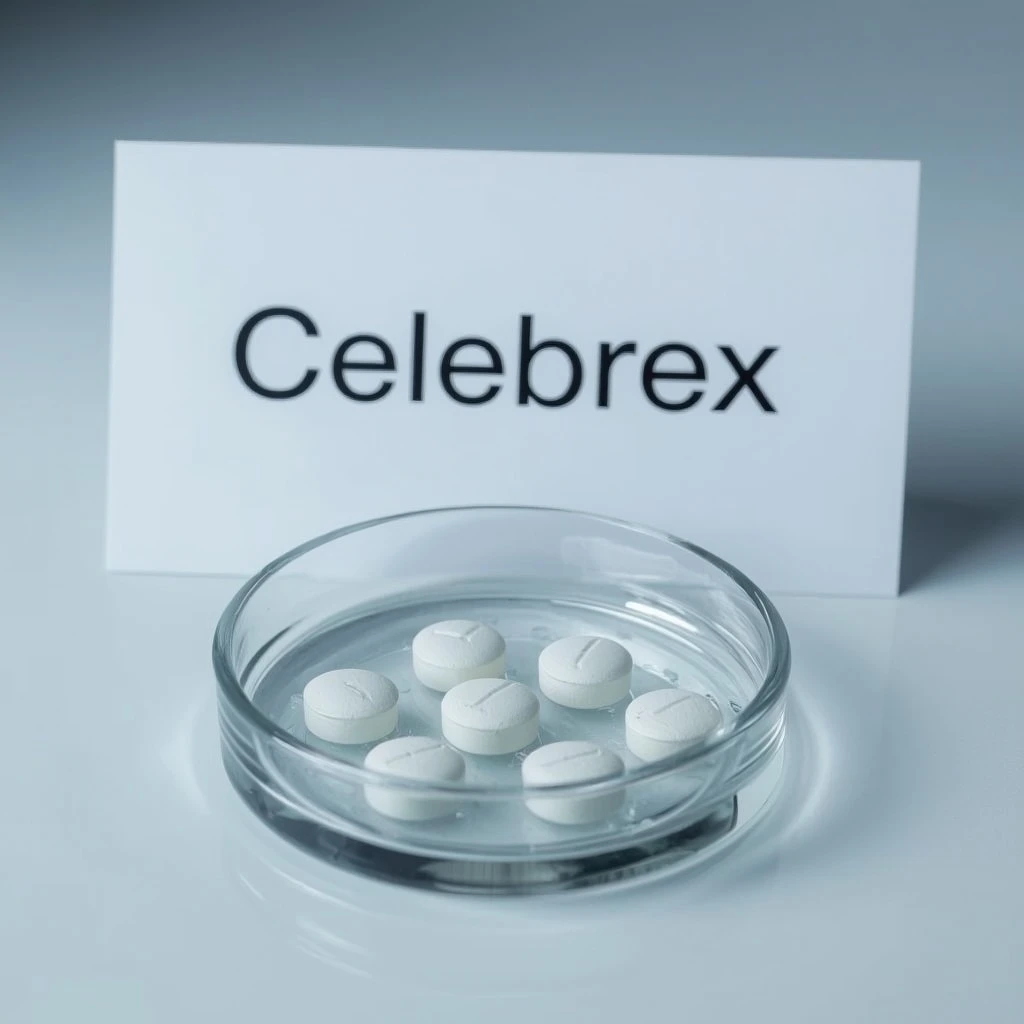
Celebrex is a brand-name nonsteroidal anti-inflammatory drug (NSAID) that contains celecoxib, a selective COX-2 inhibitor. Unlike older NSAIDs that block both COX-1 and COX-2 enzymes, Celebrex primarily targets COX-2, which is more directly involved in pain and inflammation. By reducing the production of prostaglandins—chemical messengers that trigger swelling and pain—Celebrex helps decrease joint tenderness, stiffness, and discomfort while often causing fewer stomach-related side effects than many traditional NSAIDs.
Because of its targeted mechanism, Celebrex is frequently chosen for people who require continuous anti-inflammatory therapy, such as those living with chronic arthritis. While it is not a cure for underlying joint damage, it can significantly improve movement, allow patients to stay active, and enhance overall quality of life. Its pain-relieving effects can begin within hours, with continued benefit over days to weeks when used regularly as directed.
Celebrex is most commonly prescribed for long-term management of osteoarthritis, the “wear-and-tear” form of arthritis that affects the knees, hips, spine, and hands. In osteoarthritis, the cartilage that cushions joints gradually breaks down, leading to pain, stiffness, and reduced range of motion. Celebrex helps control daily pain and allows patients to maintain mobility, participate in physical therapy, and perform routine activities with less discomfort.
It is also widely used in rheumatoid arthritis, an autoimmune condition in which the immune system attacks the lining of joints, causing inflammation, swelling, and joint damage. While disease-modifying medications target the underlying immune process, Celebrex is often added to relieve symptoms and improve day-to-day comfort. In ankylosing spondylitis, a form of inflammatory arthritis affecting the spine and sacroiliac joints, Celebrex can reduce back pain and morning stiffness, making movement and posture easier.
Patients interested in pain management and anti-inflammatory medications often appreciate the convenience of finding a broad range of prescription products in one trusted pharmacy. While browsing our catalog, many customers compare several well-known medicines for future healthcare needs. Toradol continues to be one of the most frequently viewed products on our website and remains popular with returning visitors. If you would like to explore another established medication, you can buy toradol in our store and review its detailed information.
Beyond chronic arthritis, Celebrex is approved for short-term treatment of acute pain, such as pain after an injury or minor surgery, and for the relief of primary dysmenorrhea (painful menstrual periods). Its onset of action is typically within a few hours, making it suitable for managing moderate acute pain when a non-opioid option is preferred. In some cases, clinicians may also use celecoxib off-label in specific inflammatory or pain conditions, balancing benefits and risks for each individual.
The appropriate Celebrex dosage depends on the condition being treated, the severity of symptoms, age, other medical problems, and concurrent medications. For osteoarthritis, a common starting dose for adults is 200 mg per day, taken either as a single 200 mg dose or as 100 mg twice daily. For rheumatoid arthritis, many adults are prescribed 100–200 mg twice daily. Acute pain and menstrual cramps are often treated with an initial higher “loading” dose—such as 400 mg on day one, sometimes followed by an additional 200 mg—then 200 mg twice daily as needed for the shortest possible duration.
Celebrex capsules can be taken with or without food. Taking the medication with food or milk may help reduce potential stomach upset, although Celebrex is generally gentler on the gastrointestinal tract than many nonselective NSAIDs. Capsules should be swallowed whole with water; do not crush or chew them. For patients who have difficulty swallowing, a clinician may instruct how to carefully open the capsule and sprinkle its contents on a spoonful of applesauce, to be swallowed immediately and washed down with water.
Patients should always follow the prescribed dose and schedule exactly and avoid taking more than the recommended daily maximum. The guiding principle with Celebrex—as with all NSAIDs—is to use the lowest effective dose for the shortest duration necessary to control symptoms. If pain or stiffness remains uncontrolled, do not increase your dose on your own; instead, contact a healthcare professional through services like Physician House Calls of Kansas to reassess your treatment plan and explore alternative options or dose adjustments.
Before starting Celebrex, it is essential to share your complete medical history with a clinician, including any heart disease, high blood pressure, high cholesterol, diabetes, stroke, kidney or liver disease, stomach ulcers, gastrointestinal bleeding, asthma, and any history of blood clots. Celebrex, like other NSAIDs, may increase the risk of serious cardiovascular events such as heart attack or stroke, especially when used at higher doses or for extended periods. It may also raise blood pressure or worsen existing hypertension, so regular monitoring is recommended in at-risk individuals.
Patients with a history of stomach ulcers or bleeding should use Celebrex cautiously, even though its COX-2 selectivity generally lowers the risk of gastrointestinal injury compared to traditional NSAIDs. The risk of bleeding or ulcer formation climbs when Celebrex is combined with alcohol, corticosteroids, or blood thinners, or in older adults. Individuals with moderate to severe kidney or liver impairment require special dosing considerations or may need to avoid celecoxib altogether, as NSAIDs can further compromise kidney function and affect liver enzymes.
Women who are pregnant, planning pregnancy, or breastfeeding should discuss Celebrex safety thoroughly with their clinician. NSAIDs, including Celebrex, are generally avoided during the third trimester due to the risk of complications for the fetus and the pregnancy. In early pregnancy, risks and benefits must be carefully weighed. Additionally, anyone with aspirin-sensitive asthma or nasal polyps should exercise caution, as some may experience severe breathing reactions to NSAIDs. Telemedicine providers such as Physician House Calls of Kansas use structured questionnaires and, when needed, follow-up discussions to identify these risks before authorizing Celebrex use.
Celebrex is contraindicated in people with a known allergy or severe reaction to celecoxib, other sulfonamides (sulfa drugs), aspirin, or other NSAIDs. Symptoms such as hives, facial or throat swelling, difficulty breathing, or a severe rash after taking an NSAID can signal a serious allergy, and these patients should avoid Celebrex. Because celecoxib is a sulfonamide, individuals with a documented sulfa allergy must consult a clinician and generally should not be given this medication.
It is also contraindicated immediately before or after coronary artery bypass graft (CABG) surgery, as NSAIDs have been associated with an increased risk of heart attack and stroke in this setting. Patients with active gastrointestinal bleeding, a current stomach or intestinal ulcer, or severe kidney or liver disease usually should not use Celebrex due to the potential for worsening their condition. Those with advanced heart failure may be at higher risk of fluid retention and cardiovascular complications and are typically advised against routine COX-2 inhibitor use unless benefits clearly outweigh risks under specialist supervision.
Celebrex is not generally recommended in late pregnancy, particularly after 30 weeks of gestation, because NSAIDs can affect the fetal cardiovascular system and reduce amniotic fluid. Pediatric use is restricted to certain conditions and age groups under strict medical guidance; it is not an over-the-counter drug and should never be given to children without specific pediatric dosing and supervision. In all these cases, an individualized assessment through a licensed provider, such as those working with Physician House Calls of Kansas, is essential before any access to Celebrex is granted.
Like all medications, Celebrex can cause side effects, although not everyone will experience them. Common side effects tend to be mild and may include stomach upset, heartburn, nausea, diarrhea, gas, headache, dizziness, or swelling of the hands, legs, or feet. Some people notice mild fluid retention or increased blood pressure, which is why periodic monitoring of blood pressure is sensible, especially in those with pre-existing hypertension. Many of these symptoms improve on their own as the body adjusts, but persistent or bothersome effects should prompt a conversation with a medical professional.
More serious, but less common, side effects include signs of gastrointestinal bleeding (such as black, tarry stools; vomiting blood; or severe stomach pain), sudden chest pain, shortness of breath, weakness on one side of the body, or slurred speech, which may signal a heart attack or stroke. Severe allergic reactions can present as rash, itching, swelling of the face or tongue, intense dizziness, or difficulty breathing. Rarely, Celebrex can cause serious skin reactions, liver injury (yellowing of the skin or eyes, dark urine, severe fatigue), or kidney problems (changes in urination, swelling, unexplained weight gain).
Because some of these adverse events can develop subtly at first, ongoing communication with a clinician is essential, particularly if Celebrex is used over the long term. Services like Physician House Calls of Kansas help patients understand warning signs before treatment begins and offer rapid follow-up if symptoms arise. Patients are advised to stop Celebrex and seek immediate medical attention if they experience chest pain, difficulty breathing, sudden neurological changes, severe abdominal pain, or signs of anaphylaxis or severe skin reaction.
Celebrex can interact with a wide range of medications, supplements, and even over-the-counter pain relievers, potentially increasing side effects or reducing effectiveness. Combining Celebrex with other NSAIDs—such as ibuprofen, naproxen, or high-dose aspirin—can significantly raise the risk of stomach ulcers, bleeding, and kidney problems without offering much added pain relief. Low-dose aspirin used for heart protection may still be necessary for some patients, but the combination should be carefully supervised because Celebrex does not replace aspirin’s antiplatelet effect.
Celebrex may enhance the blood-thinning effects of anticoagulants and antiplatelet drugs such as warfarin, apixaban, rivaroxaban, dabigatran, or clopidogrel, increasing the risk of bleeding. It can also interact with certain antidepressants (like SSRIs and SNRIs), corticosteroids, and alcohol to further raise bleeding risk. Patients taking ACE inhibitors, ARBs, beta-blockers, or diuretics for high blood pressure or heart disease should be cautious, as NSAIDs can sometimes blunt the blood pressure-lowering effect of these medications and contribute to kidney strain, especially in dehydrated or older patients.
Additional interactions may occur with lithium, methotrexate, and some antiepileptic or immunosuppressive drugs, where Celebrex can alter blood levels and increase toxicity. Even herbal products such as ginkgo biloba, garlic, or high-dose omega-3 supplements may have additive effects on bleeding risk when used with NSAIDs. Prior to starting Celebrex, anyone considering it through Physician House Calls of Kansas should provide a complete list of prescription medications, over-the-counter drugs, vitamins, and supplements so that a clinician can screen for interactions and adjust therapy accordingly.
If you are taking Celebrex on a regular schedule and miss a dose, take the missed capsule as soon as you remember, unless it is almost time for your next scheduled dose. In that case, skip the missed dose and return to your usual dosing time. Do not take two doses at once or “double up” to make up for a missed capsule, as this can increase the risk of side effects without improving pain control.
For patients using Celebrex only as needed for acute pain or menstrual cramps, simply take a dose when symptoms begin or as directed, making sure not to exceed the maximum daily amount recommended by your clinician. If you find that you are frequently forgetting doses or that pain returns strongly between them, discuss this pattern with a healthcare professional. Telemedicine providers can help you determine whether a different dosing schedule, a reminder plan, or an alternative medication would better suit your lifestyle and clinical needs.
Taking more Celebrex than prescribed can lead to an overdose, which may cause symptoms like severe stomach pain, nausea, vomiting, drowsiness, dizziness, fainting, black or bloody stools, coughing or vomiting blood, difficulty breathing, or seizures. Very large overdoses can lead to acute kidney failure, dangerously low or high blood pressure, and life-threatening complications, especially in individuals with existing heart, kidney, or liver problems.
If an overdose is suspected—whether because of a medication mix-up, accidental double dosing, or intentional misuse—seek immediate medical attention. Contact emergency services or a poison control center right away, and provide information about the amount taken, the timing, and any other medications or substances involved. Do not wait for symptoms to appear; early evaluation can significantly improve outcomes. After any overdose event, follow-up with a clinician is essential to reassess your pain management strategy, ensure safe access to medications, and address any underlying issues such as confusion about dosing or challenges with medication adherence.
To maintain its effectiveness and safety, Celebrex should be stored at room temperature, typically between 20°C and 25°C (68°F and 77°F), away from excessive heat, moisture, and direct light. Do not keep the capsules in the bathroom or near sinks, where humidity from showers or running water can affect the medication. Keep Celebrex in its original container with the lid tightly closed, and never use capsules that appear damaged, discolored, or past their expiration date.
As with all prescription drugs, Celebrex must be stored out of reach and sight of children and pets, ideally in a locked cabinet or secure location. Never share your medication with others, even if their symptoms appear similar, as their medical history, allergies, or other medications may make Celebrex unsafe for them. When no longer needed, or once expired, dispose of Celebrex responsibly, following local medication take-back programs or pharmacist guidance instead of throwing it in household trash or flushing it, to reduce environmental impact and prevent accidental ingestion.
In the United States, Celebrex is a prescription-only NSAID, meaning it cannot be sold legally over the counter or dispensed without involvement of a licensed healthcare provider. Traditional access typically requires an in-person visit with a physician, followed by a written or electronic prescription filled at a pharmacy. This safeguard is in place because celecoxib, like all potent anti-inflammatory drugs, carries meaningful risks alongside its benefits, including cardiovascular, kidney, and gastrointestinal complications that require professional oversight.
However, modern telemedicine has changed how patients can legally and conveniently obtain medications such as Celebrex. Physician House Calls of Kansas offers a structured, compliant alternative for adults who wish to buy Celebrex without prescription in the conventional sense of a prior in-office visit. Instead of self-medicating or turning to unsafe online vendors, patients complete a detailed medical questionnaire and, when appropriate, a virtual consultation with a licensed provider. The clinician then determines whether Celebrex is suitable, what dose is appropriate, and what monitoring is required, and issues an electronic prescription if indicated.
This model preserves all essential safety checks—screening for allergies, contraindications, and drug interactions; reviewing cardiovascular and gastrointestinal risk factors; and counseling on correct dosage and warning signs—while removing the need for a separate, time-consuming office trip. Patients still receive personalized medical judgment and documentation, but the process feels more like a streamlined online purchase. Because the medication is supplied through regulated U.S. channels under a prescriber’s supervision, patients avoid the significant dangers associated with buying Celebrex from unverified international pharmacies or “no-questions-asked” websites.
For individuals with chronic arthritis pain, menstrual cramps, or other conditions responsive to celecoxib, Physician House Calls of Kansas can thus provide a safe, legal pathway to acquire Celebrex without a prior prescription on file, while ensuring that each order is anchored in a valid patient–provider relationship. This approach balances accessibility with protection, giving patients the convenience they want without compromising the medical supervision they need.
Celebrex (celecoxib) is a prescription nonsteroidal anti‑inflammatory drug (NSAID) used to relieve pain and inflammation. It is commonly prescribed for osteoarthritis, rheumatoid arthritis, ankylosing spondylitis, juvenile idiopathic arthritis, acute pain (such as after injury or surgery), and menstrual pain. It works by selectively blocking the COX‑2 enzyme, which plays a key role in producing substances that cause pain and inflammation.
Celebrex belongs to a class of medications called COX‑2 selective inhibitors. It blocks the COX‑2 enzyme involved in the production of prostaglandins—chemical messengers that promote inflammation, pain, and fever. By reducing prostaglandin levels, Celebrex helps decrease swelling, stiffness, and pain without blocking COX‑1 as strongly, which is the enzyme that helps protect the stomach lining and support platelets.
Celebrex is most commonly used to treat:
• Rheumatoid arthritis
• Juvenile idiopathic arthritis in certain age groups
• Post‑surgical pain, in some cases
In certain patients, it may also be used for off‑label indications at the discretion of a healthcare provider.
Take Celebrex exactly as prescribed by your healthcare provider. It can be taken with or without food, but taking it with food may help reduce stomach upset. Swallow the capsule whole with water; do not crush or chew it. Try to take it at the same time each day if you are on a regular schedule. Use the lowest effective dose for the shortest duration necessary to control your symptoms. Do not increase the dose or frequency without medical advice.
The dose depends on the condition being treated:
• Rheumatoid arthritis: often 100–200 mg twice daily
• Acute pain and menstrual cramps: typically an initial higher dose (for example, 400 mg once, then 200 mg if needed on the first day), followed by lower doses on subsequent days
How long does it take for Celebrex to start working?
What are the most common side effects of Celebrex?
• Indigestion, stomach pain, gas, or nausea
• Headache
• Swelling in hands, legs, or feet (fluid retention)
Most side effects are mild and temporary. If they persist or become bothersome, contact your healthcare provider.
Serious but less common side effects can include:
• Black, tarry stools or vomiting blood (signs of gastrointestinal bleeding)
• Swelling of the face, lips, tongue, or throat; trouble breathing; or severe rash (possible allergic reaction)
• Unexplained weight gain, shortness of breath, or swelling (possible heart failure or kidney problems)
Who should avoid taking Celebrex?
• Are allergic to celecoxib, sulfonamides (“sulfa” drugs), aspirin, or other NSAIDs
• Have had recent heart bypass surgery (CABG)
• Have severe liver or kidney disease
Your doctor will review your medical history, including heart disease, high blood pressure, stroke, kidney disease, liver disease, bleeding disorders, and stomach problems, before deciding if Celebrex is appropriate.
Celebrex, like other NSAIDs, can increase the risk of heart attack and stroke, especially with higher doses or long‑term use. It can also worsen high blood pressure and fluid retention. If you have heart disease, a history of stroke, heart failure, or uncontrolled high blood pressure, Celebrex must be used with particular caution, if at all. Your doctor may choose an alternative or, if Celebrex is necessary, prescribe the lowest effective dose and monitor your blood pressure, kidney function, and overall cardiovascular status closely.
Celebrex is designed to be more selective for COX‑2 than COX‑1, which means it generally causes fewer stomach ulcers and less stomach irritation than some traditional NSAIDs. However, it can still cause serious gastrointestinal side effects, including ulcers and bleeding, especially in older adults, people with a history of ulcers or GI bleeding, those taking blood thinners, steroids, or other NSAIDs, and those who drink alcohol heavily. Do not assume Celebrex is “safe for the stomach”; precautions are still necessary.
Alcohol can increase the risk of stomach irritation, ulcers, and bleeding when combined with NSAIDs, including Celebrex. Occasional light drinking may be allowed for some people, but it is best to limit or avoid alcohol, especially if you have a history of stomach problems, liver disease, or heavy alcohol use. Always ask your healthcare provider for personalized advice about alcohol while using Celebrex.
Celebrex is not an opioid and is not considered addictive in the way narcotic pain medications can be. It does not cause physical dependence or withdrawal symptoms when stopped. However, it is still a powerful prescription medication with potential risks, and it should be taken only as directed by a healthcare professional.
Celebrex is generally avoided in the third trimester of pregnancy because NSAIDs taken late in pregnancy can affect the baby’s heart and circulation and may complicate labor. Use earlier in pregnancy is approached with caution and only if the potential benefit outweighs the risk. During breastfeeding, small amounts may pass into breast milk; the decision to use Celebrex while nursing should be made in consultation with your doctor, weighing benefits and potential infant risks.
If you are taking Celebrex on a regular schedule and miss a dose, take it as soon as you remember, unless it is almost time for your next dose. If it is close to the next scheduled dose, skip the missed one and resume your regular dosing schedule. Do not double the dose to make up for a missed dose. For “as‑needed” use, simply take it when needed, within your prescribed limits.
Unlike some medications, Celebrex does not require tapering in most cases, and you can usually stop it abruptly if your doctor agrees and your pain is controlled. However, your underlying condition (such as arthritis) may cause symptoms to return when you stop. Discuss any decision to discontinue Celebrex with your healthcare provider to ensure your pain and inflammation remain well managed and to explore alternative strategies if needed.
Celebrex can interact with several medications and supplements, including:
• Aspirin and other NSAIDs (ibuprofen, naproxen, diclofenac)
• Lithium
• Certain antidepressants that affect bleeding risk (SSRIs, SNRIs)
• Some herbal supplements that affect bleeding (ginkgo, garlic, ginseng, high‑dose omega‑3)
Can children take Celebrex?
How long can I safely stay on Celebrex?
Does Celebrex affect the kidneys or liver?
Can I take Celebrex with acetaminophen (Tylenol)?
How does Celebrex differ from ibuprofen?
Is Celebrex better than ibuprofen for arthritis pain?
How does Celebrex compare to naproxen?
Is Celebrex safer than diclofenac?
How does Celebrex compare to meloxicam?
Is Celebrex more effective than other NSAIDs for back pain?
Can I take Celebrex together with other NSAIDs like ibuprofen or naproxen?
How does Celebrex compare to aspirin for pain and inflammation?
Can I use Celebrex if I am already taking low‑dose aspirin for my heart?
How does Celebrex compare to over‑the‑counter NSAIDs for long‑term use?
Is Celebrex a COX‑2 inhibitor and how is that different from traditional NSAIDs?
How does Celebrex compare to other COX‑2 inhibitors that used to be available?
Is Celebrex better tolerated than traditional NSAIDs in patients with a history of stomach ulcers?
How does the cardiovascular risk of Celebrex compare to other NSAIDs?
Is Celebrex more expensive than other NSAIDs, and does that affect choice?
When might a doctor prefer Celebrex over other NSAIDs?
• Needs long‑term anti‑inflammatory therapy for arthritis
• Has not tolerated other NSAIDs well in the past
Even in these situations, the doctor must still consider cardiovascular, kidney, and other risks. The decision is individualized and may change over time as your health and response to treatment evolve.